
The Ultimate Flex: Why Formula 1 Merchandise is the New Global Currency of Cool
Updated: Feb 18
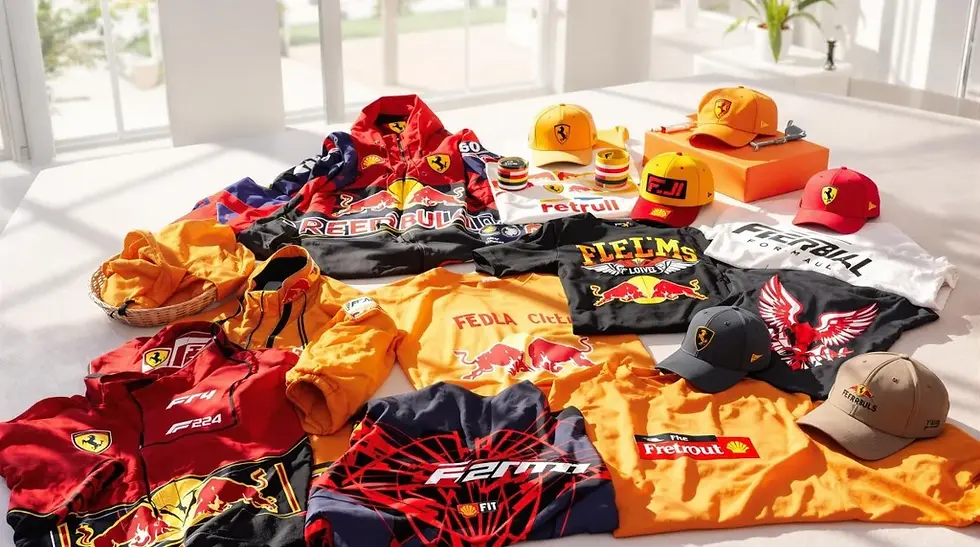
For decades, the standard "fan kit" for a Formula 1 enthusiast was a polyester team polo, a slightly ill-fitting cap, and perhaps a lanyard. It was functional, corporate, and to be honest socially restricted to the racetrack. But walk through SoHo, Mayfair, or Ginza today, and you’ll see a different story. A pipeline from “Paddock to Pavement” has transformed F1 merchandise from souvenir into a de facto luxury asset. With LVMH announcing a groundbreaking 10-year partnership with Formula 1 from 2025, it’s obvious: the racetrack is the new runway, and the merch drop is the new trophy.
The Scarcity Engine: Why We Want the ‘Drop’
The rebranding of Formula 1 mirrors the progression of esteemed streetwear labels, such as Supreme or Aimé Leon Dore. Forget mass-producing shirts; we live in “Drop Culture.” When a team like McLaren or Ferrari comes out with a limited-edition capsule collection—like the Miami Grand Prix “blue” liveried gear, or that Mercedes-AMG x Awake NY collab—they’re not really selling clothing. In other words, they are selling digital and social scarcity.
● The Psychology of the Flex: Owning merchandise that sold out within four minutes is the highest declaration of “insider” status.
● The Resale Market: Much like limited-run sneakers, rare F1 pieces are now commanding a premium on legends’ items as the secondary market matures, with StockX and Grailed among those cashing in on their role as cultural currency.
The Brand From Pit Lane to High Fashion: The Legacy
Benetton, traditionally, was the trailblazer: It showed in the ’80s that a clothing label could own an entire F1 team and make it serve as a global billboard for lifestyle. Today, that tradition has grown into advanced technical and aesthetic collaborations.
The Identity Cluster: Paddock Icons
Ferrari (Scuderia Ferrari): The only marque for which the merchandise is the lifestyle. Ferrari’s in-house fashion line, headed by the creative director Rocco Iannone, pushes Ferrari from “car gear” into high-end Italian couture.
Lewis Hamilton x Tommy Hilfiger This is when the modern era began. By adding Hamilton’s personal style to global collections, they demonstrated an F1 driver could be a “style-savant” in the way NBA or NFL stars are.
Both in it to win it: the two words that sum up “quiet luxury,” says Farnsworth. Their gear borrows from the “preppy” history of British motoring but uses high-performance technical fabrics.
Comparison: Replica Gear vs. Lifestyle Collections Let’s compare this replica gear to some lifestyle collections. In popsphere terms, the “merch” ecosystem is divided for the contemporary consumer. This is the ticking heart of the Formula 1 lifestyle plan.
Feature | Official Team Replica | Lifestyle/Capsule Collections |
Primary Audience | Hardcore Race Fans | Gen Z, Fashionistas, Hypebeasts |
Design Language | Heavy Logo Placement (Sponsors) | Minimalist or "Graphic-Heavy" Streetwear |
Wearability | Optimized for the Grandstand | Designed for the Club or the Street |
Example | Red Bull Racing Pit Shirt | Daniel Ricciardo's Enchanté or AlphaTauri |
The "Drive to Survive" Effect: A New Demographic
The "Ultimate Flex" isn't just for the traditional automotive enthusiast. Data shows a 35% surge in Earned Media Value (EMV) for fashion brands associated with F1 in 2023 alone. The influx of female fans and Gen Z consumers has forced teams to pivot. Why is F1 merch suddenly trending with women? The “Paddock style” now may be a TikTok subgenre. Fans are no longer merely purchasing a shirt; they’re “styling” the sport. The result is branded partnerships with beauty labels like Charlotte Tilbury and “Hyper-curated” drops that prioritize fit and fabric over sponsor logos.
Engineering the Future: Sustainability and Innovation
The merchandise is keeping pace as Formula 1 hurtles towards a Net-Zero carbon goal by 2030. Now the “Ultimate Flex” comes with a morality play.
Circular Fabrics: Designing with recycled ocean plastic in team kits.
Digital Assets: The era of NFT-wearables allow fans to literally “wear” their team’s latest drop in the metaverse.
Technical knowhow: Brands such as Puma are employing "biometric" fabrics in their F1 lines, blurring the line between top-level athlete wear and consumer life style.
Conclusion: More Than a Logo
How F1 merchandise has evolved That development of F1 merchandise is part of a wider change of how we consume sports. It is no longer something that happens on the occasional weekend, but a way of life. Be it a TAG Heuer timepiece or an exclusive McLaren varsity jacket, wearing the brand is a statement of technical appreciation and cultural relevance.” In the cutthroat world of Formula 1, the race may end on Sunday, but the “flex” is forever.



Comments