
The Complete Guide to Luxury Brand Identity Design
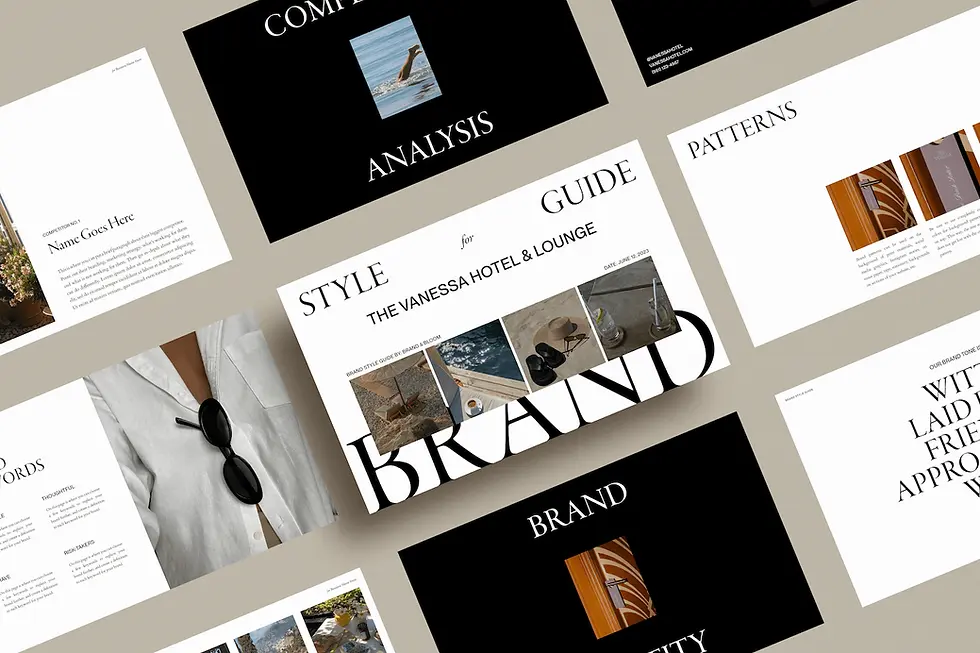
In 2024, luxury brands face an unprecedented challenge: standing out in a saturated market where competitors can replicate products, but not purpose. While luxury goods have become more accessible, the visual language and identity of a brand how it communicates, presents itself, and connects emotionally with its audience has become the defining factor in building lasting loyalty. Luxury brand identity design isn't just about creating a pretty logo or choosing an elegant color palette. It's about constructing a complete visual ecosystem that communicates exclusivity, craftsmanship, and heritage. Whether you're in the automotive, lifestyle, hospitality, or experiential sectors, a strategic approach to brand identity design for luxury markets can increase perceived value, strengthen customer loyalty, and create a competitive moat that transcends price. This guide explores how leading brands build iconic visual identities that generate desire and elevate perception in the luxury market.
What Is Luxury Brand Identity Design? Understanding the Fundamentals
Brand identity design is the complete visual and strategic system that represents your company's values, personality, and promise. For luxury brands, this encompasses:
• Logo and wordmark design - The visual anchor
• Color psychology and palettes - Evoking emotion and exclusivity
• Typography systems - Refined, intentional letterform choices
• Photography and visual imagery - Lifestyle and aspirational storytelling
• Design guidelines and brand systems - Ensuring consistency across touchpoints
• Packaging and print design - Physical manifestations of brand promise
• Digital and experiential brand presence - Web, social, and events
Luxury brand identity design differs fundamentally from mainstream branding. While a commercial brand might prioritize immediate recognition, luxury branding prioritizes refined sophistication, emotional resonance, and perceived scarcity. The design should feel intentional, curated, and impossible to replicate without diminishing its value.
The Strategic Foundation: Before You Design, Define Your Brand
Many companies skip the most critical phase of brand identity design: the strategic discovery process. This is where the best luxury branding begins.
Uncovering Brand DNA
The strongest brand identity design services start by answering difficult questions:
• What is your brand's origin story and heritage?
• What specific problem does your brand solve that competitors don't?
• Who is your ideal customer, and what do they aspire to?
• What emotional response do you want your visuals to trigger?
• How does your brand fit within the competitive luxury landscape?
For automotive brands like Audi or Ferrari, the brand identity design tells a story of engineering excellence, heritage, and performance. For luxury hospitality like 1 Hotels or Aspen Snowmass, the identity communicates exclusivity, experience, and lifestyle elevation. This strategic foundation informs every design decision that follows. Without it, your visual identity becomes disconnected from your business strategy.
Positioning and Differentiation
Luxury brand identity design must differentiate in the premium market. Are you the traditional, heritage-driven luxury player? Or the modern disruptor challenging conventions?
Your positioning directly influences your brand identity design choices:
Heritage luxury favors timeless typography, classical color palettes, and emphasis on craftsmanship
Modern luxury allows for unexpected color combinations, contemporary imagery, and bold typography
Experiential luxury prioritizes immersive visuals, lifestyle photography, and emotional storytelling
Core Elements of Luxury Brand Identity Design
1. Logo and Mark System
Your logo is the most visible element of your brand identity design, yet it should represent only 5% of your overall identity system. For luxury brands, the logo must be:
• Timeless - Able to remain relevant for decades without major redesigns
• Versatile - Function beautifully at any scale, in any medium
• Distinctive - Immediately recognizable within your category
• Refined - Elegant without being trendy or overly complex
Consider how Bugatti's logo conveys performance and Italian craftsmanship, or how Design Miami's identity communicates curated excellence. These marks work because they're built on strategic positioning, not aesthetic whims.
2. Color Psychology in Luxury Brand Identity
Color is the most immediate communicator in any brand identity design system. Luxury brands use color strategically:
• Black and white - Timelessness, sophistication, exclusivity
• Jewel tones (emerald, sapphire, gold) - Heritage, luxury, intrinsic value
• Neutral palettes (cream, taupe, charcoal) - Refinement, restraint
• Bold, unexpected colors - Modern luxury disruption and personality
The color choices in your luxury brand identity design must align with your positioning. A heritage watchmaker won't use neon; a contemporary lifestyle brand might.
3. Typography Systems
Typography is often underestimated in luxury brand identity design, yet it's the voice of your brand. Luxury typography typically favors:
• Serif typefaces - Traditional, established, heritage-driven
• Refined sans-serifs - Modern luxury, clean and intentional
• Custom or bespoke typefaces - Ultimate differentiation for luxury brands
The spacing, sizing, and hierarchy of your typography communicate sophistication and intentionality. In luxury brand identity design services, typography shouldn't be an afterthought it's structural to your entire visual language.
4. Photography and Imagery Direction
For luxury brands, photography and visual imagery are the most powerful tools in brand identity design. High-end automotive and lifestyle photography communicate:
Craftsmanship and detail - Close-up product shots revealing quality
Lifestyle and aspiration - Environmental imagery showing how the brand fits into a desired life
Human connection - Authentic moments that reveal personality
Scarcity and exclusivity - Curated imagery that feels selective, not mass-produced
The photography direction for your luxury brand identity design must feel cohesive yet distinctive. It's the difference between brands that feel like luxury and brands that merely look expensive.
The Modern Luxury Brand Identity Design Landscape (2024-2025)
Trend 1: Personalization Over Perfection
Modern luxury brand identity design increasingly embraces imperfection. Handwritten elements, organic textures, and artisanal touches are replacing sterile perfection. The message: this is curated and personal, not mass-produced.
Trend 2: Sustainability and Responsible Design
Luxury brand identity design now communicates values around sustainability, ethical sourcing, and environmental responsibility. Visual systems are incorporating natural materials, earth tones, and design elements that reflect brand commitment to responsible practices.
Trend 3: Digital-First Identity Systems
While heritage matters, luxury brand identity design must now exist flawlessly in digital spaces first. Responsive design, motion graphics, and digital experiences are central to modern brand identity design, not afterthoughts.
Trend 4: Authenticity and Heritage Storytelling
Rather than generic luxury aesthetics, leading brands emphasize authentic heritage storytelling. Brand identity design now incorporates historical narratives, founder stories, and cultural roots that create emotional depth.
Trend 5: Bold Originality
The luxury market increasingly rewards brands that stand out through original, unapologetic design choices. Rather than playing it safe with predictable luxury aesthetics, brands are using their identity design to communicate distinctive personality and point of view.
Why Professional Brand Identity Design Services Matter
Creating luxury brand identity design in-house or with generalist designers often results in:
Lack of strategic depth - Beautiful visuals disconnected from business strategy
Inconsistency - Identity systems that don't translate across touchpoints
Missed market positioning - Design that doesn't differentiate from competitors
Poor scalability - Systems that work for one application but break elsewhere
Professional brand identity design services that specialize in luxury markets bring:
Industry expertise - Understanding of what resonates in automotive, hospitality, lifestyle sectors
Strategic discipline - Ensuring design serves business objectives
Comprehensive systems - Complete brand ecosystem, not isolated assets
Premium positioning - Design that elevates perception and justifies pricing
Building Your Luxury Brand Identity Design Strategy
If you're planning a brand identity design project, follow this roadmap:
Phase 1: Discovery and Strategy (2-3 weeks)
Research competitive landscape, define brand positioning, clarify target audience, establish design objectives and brand personality.
Phase 2: Concept Development (3-4 weeks)
Explore multiple visual directions, test concepts with stakeholder feedback, refine promising directions, validate strategy alignment.
Phase 3: Design Refinement (2-3 weeks)
Finalize primary visual elements, develop comprehensive color systems, establish typography hierarchy, create detailed brand guidelines.
Phase 4: System Development and Testing (2-4 weeks)
Build complete identity system for all applications, test across digital and print, refine based on real-world application, create comprehensive brand documentation.
Phase 5: Implementation and Launch (Ongoing)
Roll out brand identity design across all touchpoints, train teams on proper usage, monitor consistency, evolve as market demands.
Common Mistakes in Luxury Brand Identity Design
Mistake 1: Following Design Trends
Luxury brand identity design must be timeless, not trendy. What feels fresh today looks dated in three years. Focus on enduring principles over current aesthetics.
Mistake 2: Over-Designing
More elements don't equal more luxury. Refinement comes from strategic simplification. The best luxury brand identity design communicates through restraint and intentionality.
Mistake 3: Ignoring the Full System
A great logo alone doesn't constitute brand identity design. The complete system—how all elements work together across touchpoints determines whether your identity feels cohesive and premium.
Mistake 4: Disconnecting Design from Strategy
When brand identity design is purely aesthetic without strategic grounding, it fails to create competitive differentiation. Every design choice must serve your positioning.
Mistake 5: Rushing the Process
Luxury brand identity design done quickly rarely feels considered. The best results emerge when adequate time is invested in discovery, strategy, iteration, and refinement.
Conclusion
In a market where products can be copied but identity cannot, your brand identity design is your most valuable asset. It communicates your values before anyone experiences your product. It justifies premium pricing. It builds emotional loyalty that transcends rational comparison. Whether you're an automotive brand competing on heritage and innovation, a luxury hospitality brand competing on experience, or a lifestyle brand competing on aspiration, your brand identity design must do the heavy lifting of differentiation. The strongest luxury brands don't follow the pack—they set the standard. Their visual identities are distinctive, refined, intentional, and impossible to ignore. If your current brand identity design isn't creating this impact, now is the time to invest in a comprehensive rebrand. The return on that investment, measured in perception, loyalty, and competitive advantage, far exceeds the cost. Your brand identity design is more than how you look. It's how you're perceived, remembered, and chosen. Make it count.
Key Takeaways
• Strategic foundation precedes all design decisions
• Luxury brand identity design must differentiate, not imitate
• Complete systems matter more than isolated beautiful elements
• Photography and imagery are critical to modern brand identity design
• Timelessness and originality balance in premium markets
• Professional expertise in luxury branding delivers measurable returns
• Your brand identity design is your competitive moat


Comments